Discover
Get Back to the Body and Fitness You Recognise

Before your baby arrived, maybe you were in the gym a few times a week, running, lifting, or just moving through your day without thinking about it. Now you might be dealing with a leaky bladder when you sneeze or run, a core that does not feel like yours anymore, or simply the question of where to even start again. You are not broken, and you do not have to just live with it. This is exactly what post natal physiotherapy is for, and we can help you get back to it safely and confidently.
We see women from across Handforth, Wilmslow, Alderley Edge, Cheadle, Poynton, Bramhall, Cheadle Hulme, Altrincham, Hale and Hale Barns, Bowdon, Woodford, Disley, New Mills and Styal, at any point after birth, whether that is six weeks ago or six years ago.
Who This Service Is For
This service is for any woman who has given birth, whatever type of birth you had, and however long ago it was. It is particularly suited to women who:
- Notice leaking urine when they cough, sneeze, laugh, run or lift weights
- Feel a gap or doming along their stomach muscles (abdominal separation, or diastasis recti)
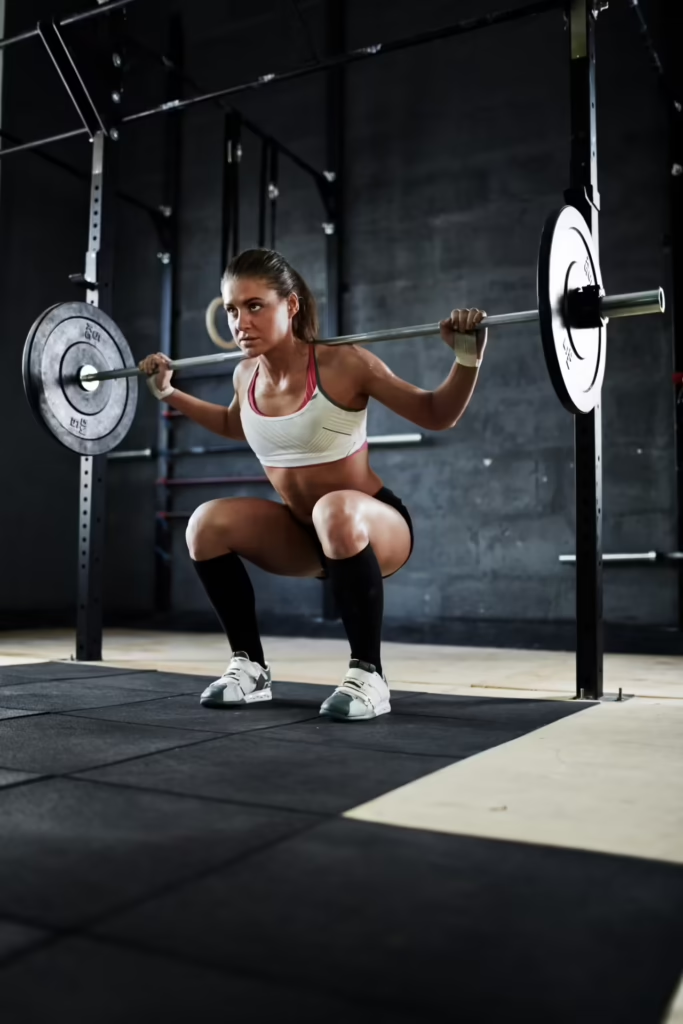
- Were active before pregnancy, at the gym, running, or in classes, and want a safe, structured way back rather than guessing
- Feel generally weaker or less stable through their core and pelvis than before
- Have been told to “just do your pelvic floor exercises” and are not sure if they are doing them correctly, or whether they are enough
Common Problems We Treat
- Stress incontinence, leaking with coughing, sneezing, laughing, running or jumping
- Urgency and frequency of needing the toilet
- Abdominal separation (diastasis recti) and a weak or unstable core
- General deconditioning after birth, feeling unfit, unstable or unsure how to train again
- Lower back, hip or pelvic pain that has continued after birth
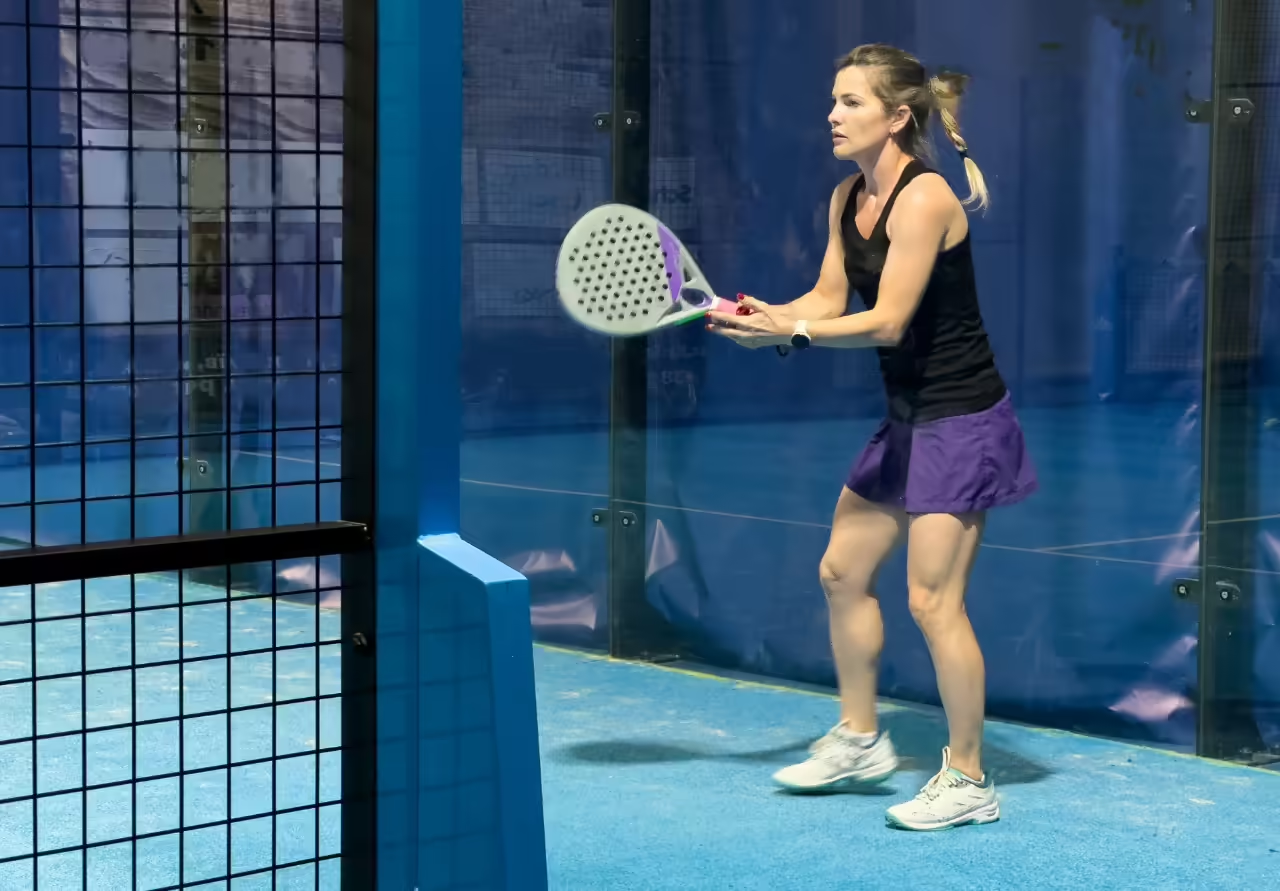
- Uncertainty or anxiety about returning to running, the gym, or high-impact exercise
What Post Natal Physiotherapy Involves
Your treatment plan is built around your body and your goals, not a generic checklist. It typically includes pelvic floor assessment and rehabilitation, guidance on abdominal separation and core recovery, and a structured, progressive return-to-exercise plan that respects where your body actually is right now, rather than where you think it “should” be.
For women looking to get back to the gym, running, or higher-impact training, we build a clear progression from foundational pelvic floor and core control through to load-bearing and impact work, so you are not left guessing when it is safe to pick weights back up or lace up your trainers again.
Assessment Process
Your first appointment is a thorough, head-to-toe assessment covering pelvic floor function, abdominal separation, posture, and your readiness to return to exercise. It starts with a private conversation about your birth, your symptoms and your goals, followed by a physical assessment, always explained clearly and only carried out with your full consent.
Where an internal pelvic floor assessment is clinically appropriate, we will explain exactly what it involves before going ahead, and many aspects of pelvic floor function can also be assessed externally if you would prefer.
What to Expect at Your First Appointment
Your initial assessment lasts approximately (initial post natal assessment duration, to confirm with the clinic, typically 45 to 60 minutes) and is recommended from around 6 weeks after birth, whether you had a vaginal delivery or a caesarean section. By the end of it, you will have a personalised treatment and return-to-exercise plan, with a realistic sense of timescales.
You do not need a GP referral to book.
Why Choose Handforth Physiotherapy and Rehab
- Chartered Society of Physiotherapy (CSP) and HCPC-registered physiotherapists
- Based locally at 59 Wilmslow Road, Handforth, easy to reach from Wilmslow and the surrounding area
- Private, one-to-one appointments, never rushed
- Recognised by WPA, and AVIVA
- A direct route into our Physio-Led Pilates and Reformer Pilates services for ongoing core and pelvic floor strength once your rehabilitation is underway
Recovery After Caesarean
A caesarean is major abdominal surgery, and recovery deserves the same structured approach as any other post natal presentation. We support women who have had a caesarean section with a rehabilitation plan built specifically around what a C-section involves, rather than treating it as an afterthought to vaginal delivery care.
This includes:
- Gentle, progressive core reactivation in the early weeks, working with the healing abdominal wall rather than around it
- Guidance on protecting and gradually loading the scar area as movement and confidence increase
- Posture and movement advice for the early weeks, including lifting, carrying a car seat, and everyday movements that load the abdomen
- A structured return-to-sport and return-to-exercise pathway, respecting that healing tissue and abdominal muscle separation are often more significant after a caesarean
- Screening for pelvic floor and core dysfunction, since caesarean birth does not remove the need for pelvic floor rehabilitation
Outcomes and Limitations
Many women notice a real improvement in pelvic floor symptoms and core strength within a small number of sessions, and most are able to return to some form of exercise sooner than they expect, when it is structured properly. Some symptoms, particularly more significant abdominal separation or persistent incontinence, take longer and benefit from an ongoing plan rather than a quick fix. Post natal physiotherapy manages and improves symptoms; it does not guarantee a complete resolution in every case, and if you experience heavy bleeding, severe pain, or any symptom that concerns you medically, please contact your GP or maternity unit directly.
Book Your Post Natal Physiotherapy Appointment
Call 01625 783992 or WhatsApp +44 7792 068822 to book, or book online via our Contact page. No referral needed.
Read more about us, meet the team on Meet the Team, or return to our homepage to see all our services, including Pregnancy MSK Physiotherapy if you are still expecting, and Physiotherapy Home Visits if getting to clinic with a newborn is difficult in the early weeks.
If you are unsure whether this is the right service for you, our Who We Help page and full FAQ page cover more general questions.
Frequently Asked Questions
Post Natal Physiotherapy FAQs
How soon after birth can I start post natal physiotherapy?
We recommend from around 6 weeks after birth, whether you had a vaginal delivery or a caesarean section, though it is never too late to start, even years after having a baby.
Do I need a referral?
No, you can book directly with us without a referral from your GP or midwife, although we are happy to liaise with them if useful.
I leak a little when I run or jump, is that normal?
It is common, but common is not the same as normal, and it is very treatable. Leaking during exercise is one of the most frequent reasons women come to see us, and most see real improvement with the right pelvic floor and return-to-exercise plan.
Can you help me get back to the gym or running?
Yes, this is a core part of what we do. We build a structured, progressive plan from pelvic floor and core control through to load-bearing and impact exercise, so you know when and how it is safe to push harder.
What is abdominal separation, or diastasis recti?
It is a natural widening of the connective tissue between your stomach muscles during pregnancy, which does not always close fully on its own afterwards. We assess this and provide a targeted core rehabilitation plan.
Will I need an internal examination?
Not necessarily. Many aspects of pelvic floor function can be assessed externally. Where an internal assessment is clinically appropriate, we always explain it fully first and only proceed with your consent.
Is post natal physiotherapy only for the first few months after birth?
No, there is no time limit. Many women come to us months or years after having a baby, once they finally decide to address symptoms they have lived with for a long time.
How many sessions will I need?
This varies depending on your symptoms and goals. Many women notice improvement within a few sessions, while others, particularly those working towards higher-impact training, prefer an ongoing progressive plan.
Is post natal physiotherapy covered by my insurance?
We are recognised by Recognised by WPA, and AVIVA. Please check your specific policy, or contact us and we can help confirm this before your appointment.
How much does post natal physiotherapy cost?
Current prices are listed on our Pricing page, or call us on 01625 783992 to discuss costs before booking.
Handforth Physiotherapy and Rehab
Expert Physiotherapy and Rehab in Handforth
Contact details:
- Phone: 01625 783992
- Email: info@handforthphysiotherapy.com
- WhatsApp: +44 7792 068822
- Address: 59 Wilmslow Road, Handforth, Cheshire, SK9 3EN